Word Shapes
aka Letter-Adjacency Graphs.
FIRE is a linear word. AQUA is a triangle. AUTOMATA is shaped like a house.
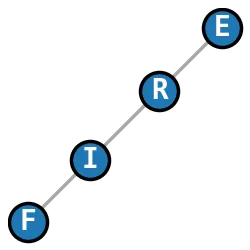
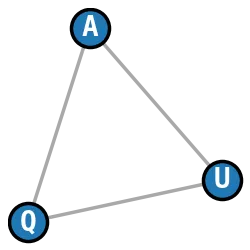
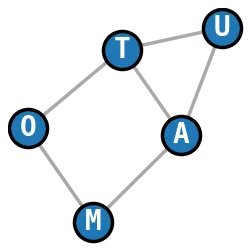
Define a word’s “shape” as the graph1 where two letters are connected iff they’re adjacent in the word.
The Smallest Missing Shape
For five or fewer unique letters, there was only one graph where I couldn’t find a word. It’s this one:

The missing graph is K5, aka the pentatope graph, aka the spooky pentagram.2
There is a caveat. The smaller K4 graph only has one associated word, and that’s GENSENGS, which is the plural of an alternate spelling of “ginseng”. That’s… iffy, but it is in the Scrabble dictionary.
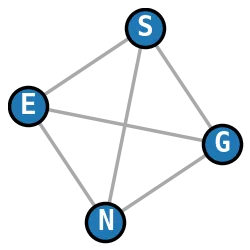
For less tenuous K4 matches from other languages, Spanish has TINIENTE and Portuguese has LEALDADE.
Besides K4 and K5, I was able to find entirely sensible words for every one of the 30 possible3 graphs of size 5 or smaller.
Table of Word Shapes
Here are my favorite words with each shape:
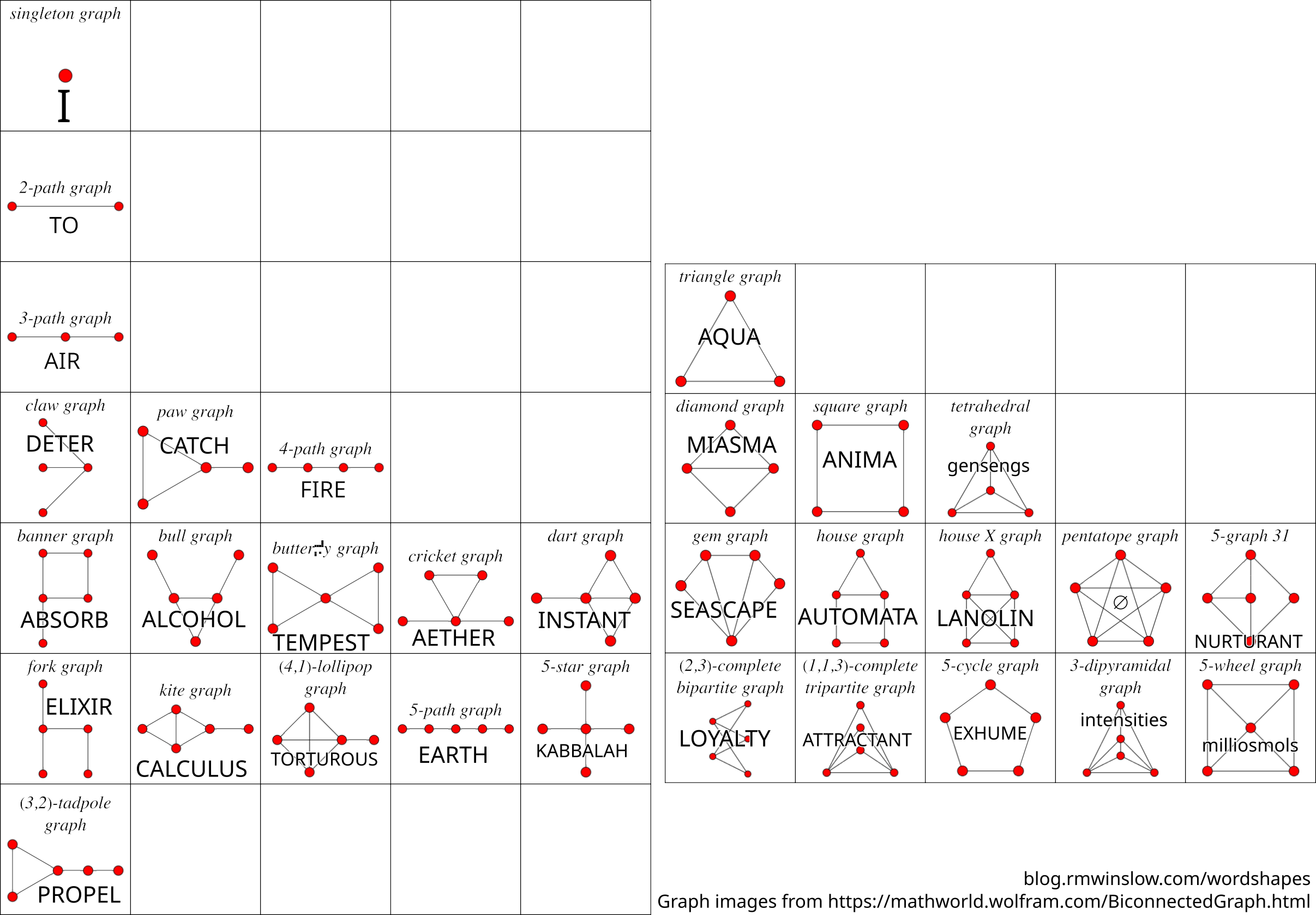
And here’s a tabular version of the same:
| Graph | Example Word | Visualization |
|---|---|---|
| singleton graph | i |  |
| 2-path | to | 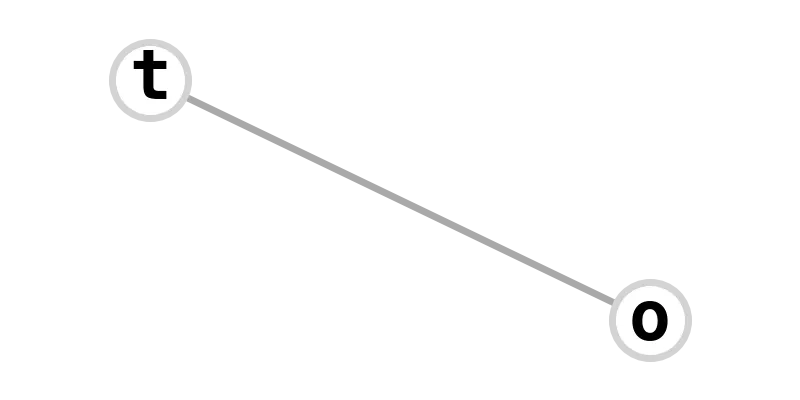 |
| 3-path | air | 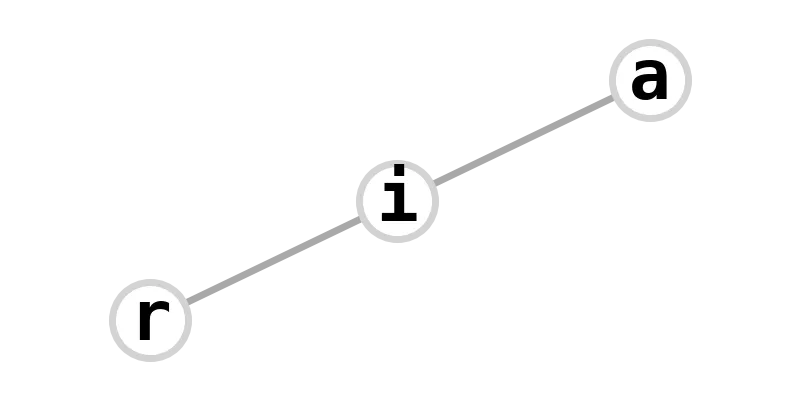 |
| K3 (triangle) | aqua | 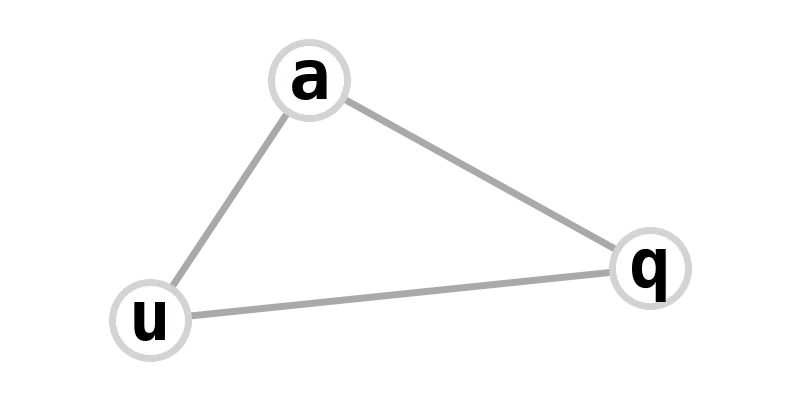 |
| paw graph | catch | 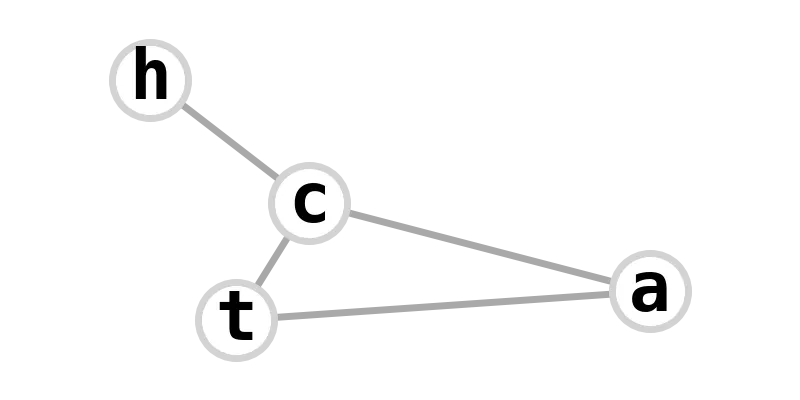 |
| 4-path | fire | 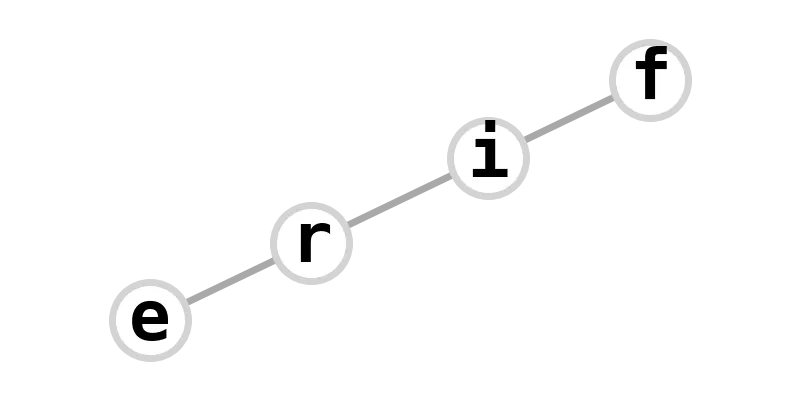 |
| diamond graph | miasma | 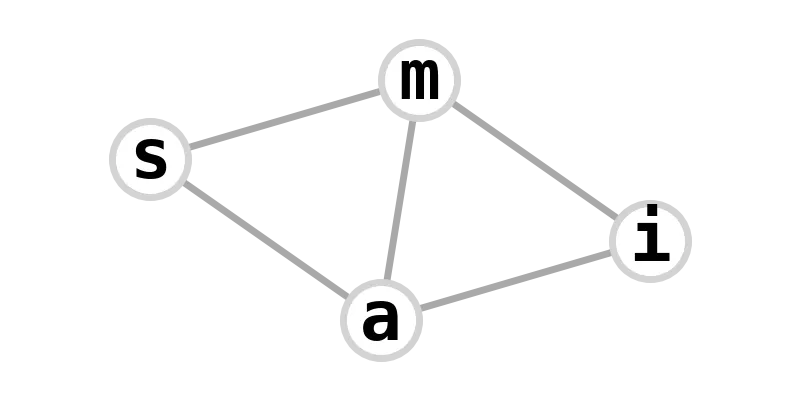 |
| square graph | anima | 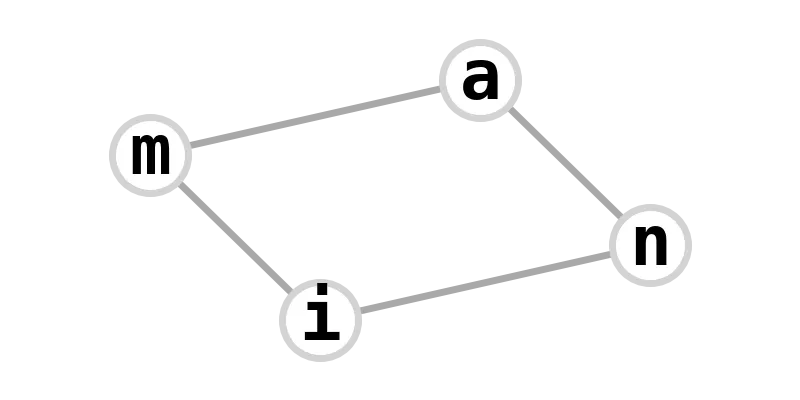 |
| K4 (tetrahedron) | gensengs | 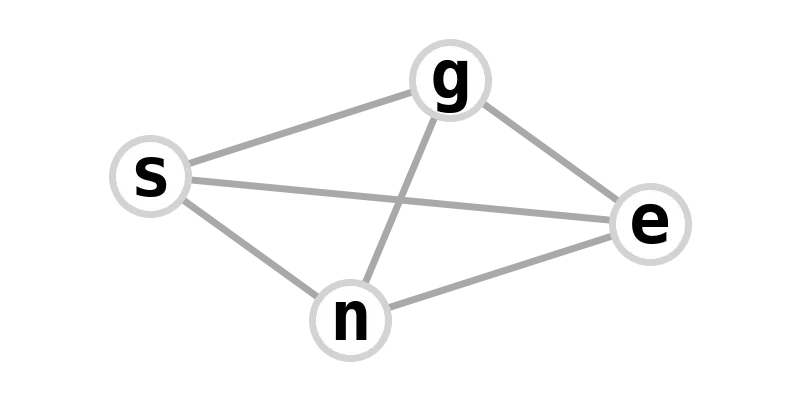 |
| banner graph | absorb | 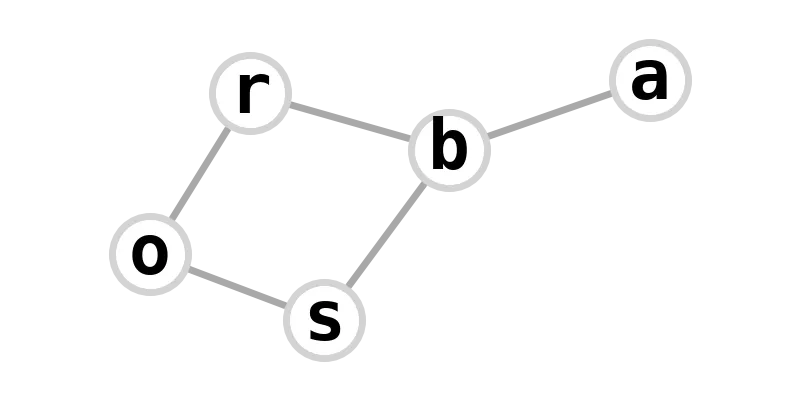 |
| fork graph | elixir | 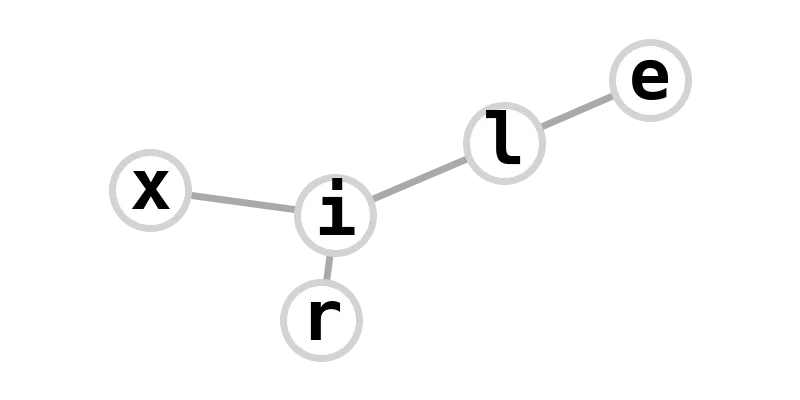 |
| (3,2)-tadpole graph | propel | 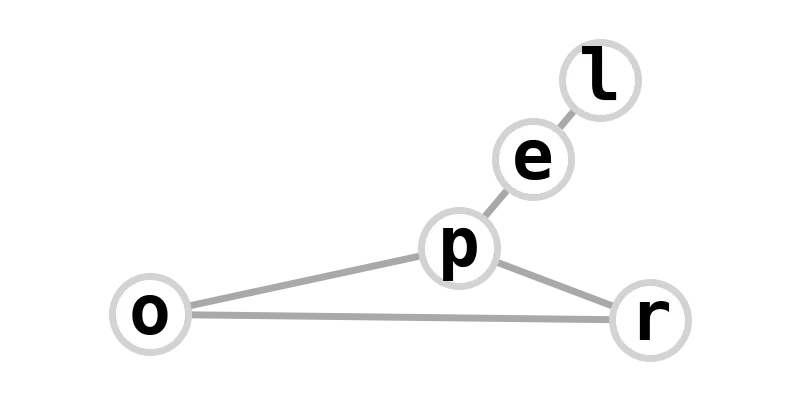 |
| bull graph | alcohol | 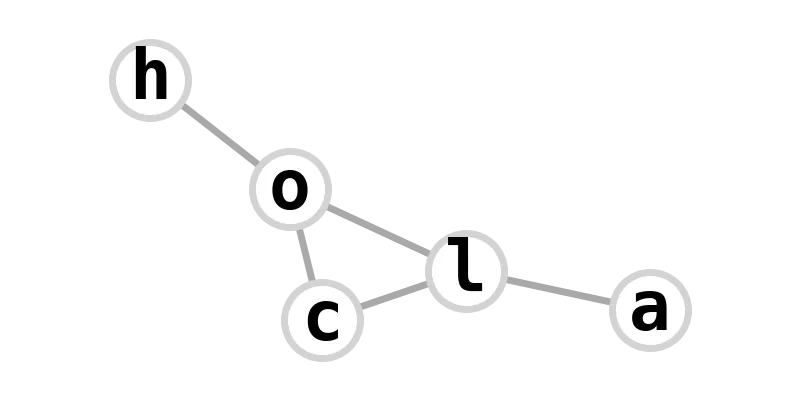 |
| kite graph | calculus | 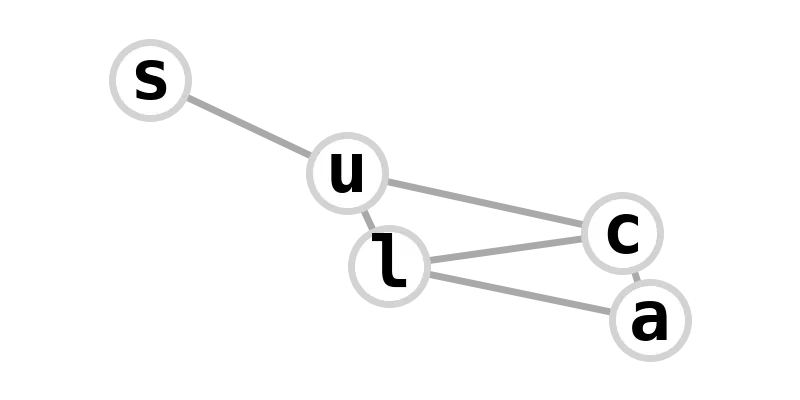 |
| butterfly graph | tempest | 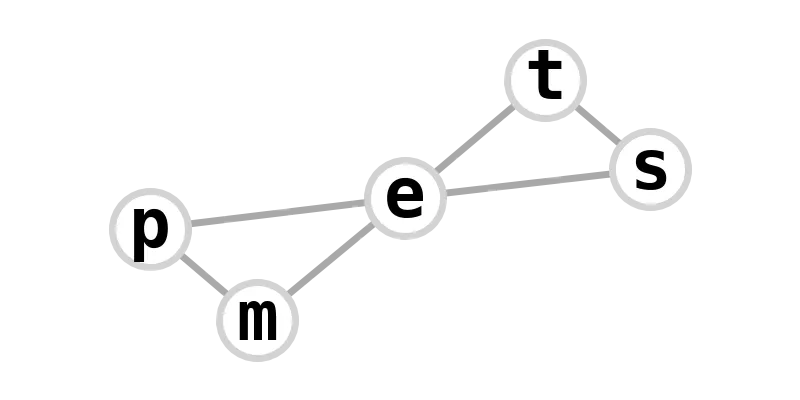 |
| (4,1)-lollipop graph | torturous | 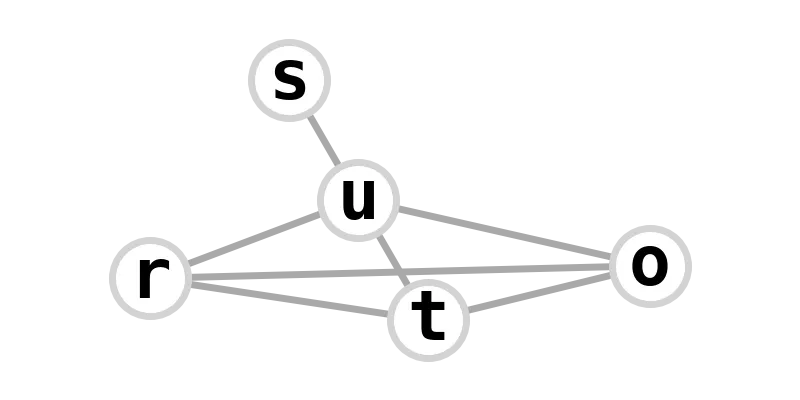 |
| cricket graph | aether | 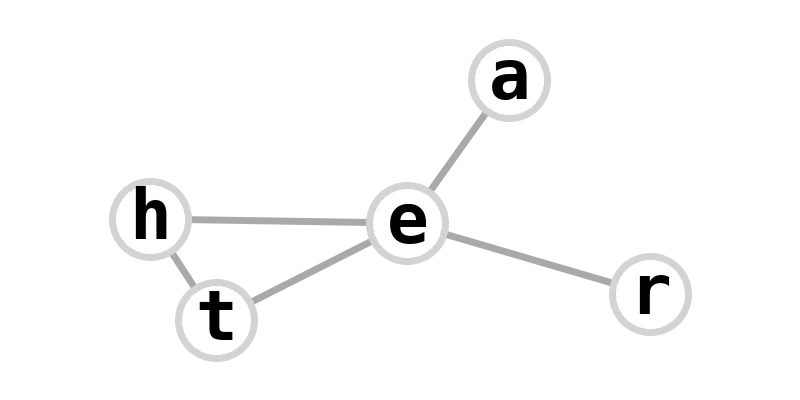 |
| 5-path | earth | 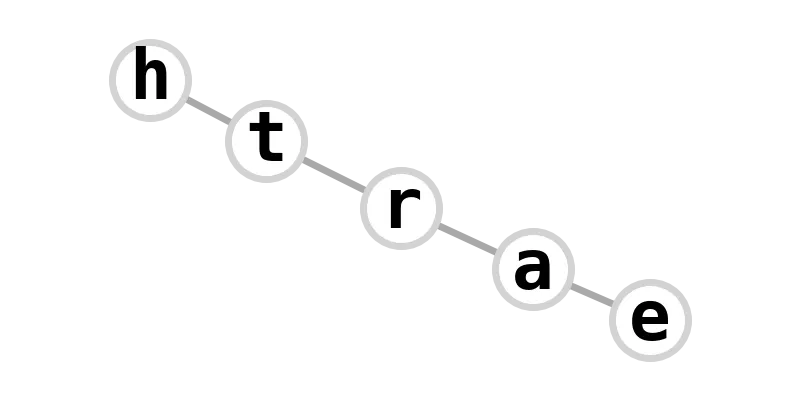 |
| dart graph | instant | 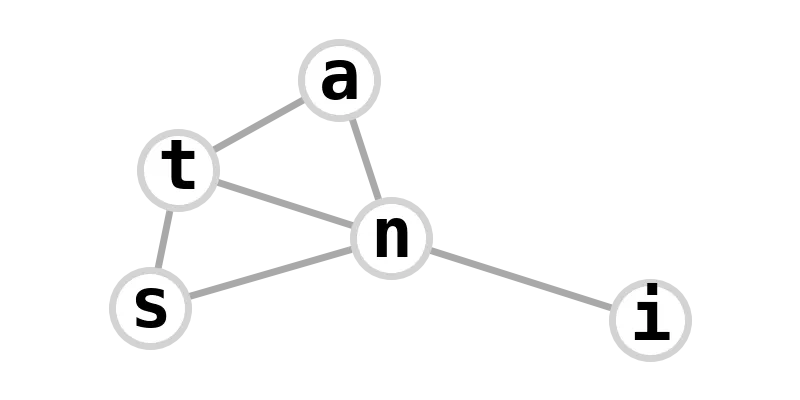 |
| 5-star | kabbalah | 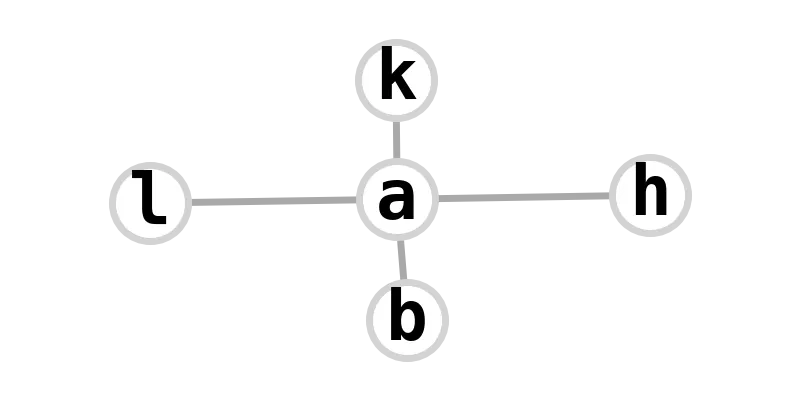 |
| gem graph | seascape | 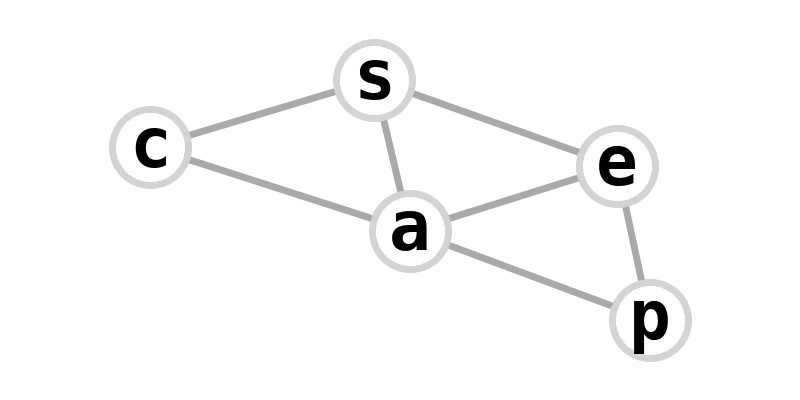 |
| (2,3)-complete bipartite | loyalty | 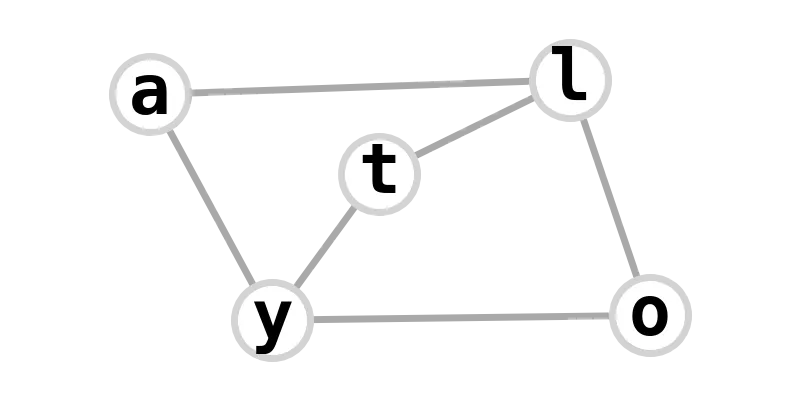 |
| house graph | automata | 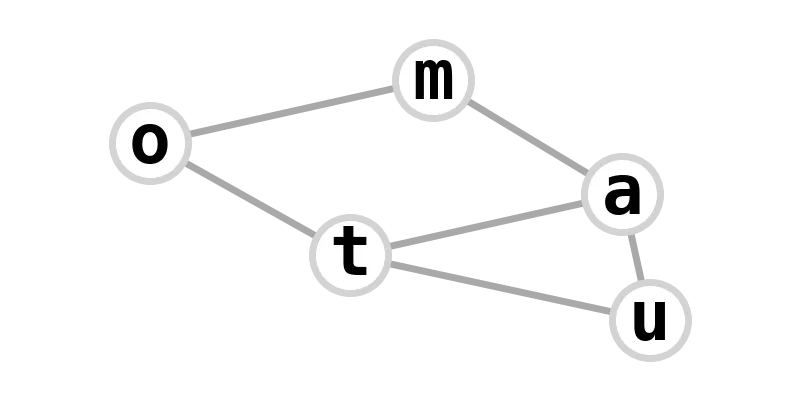 |
| (1,1,3)-complete tripartite | attractant | 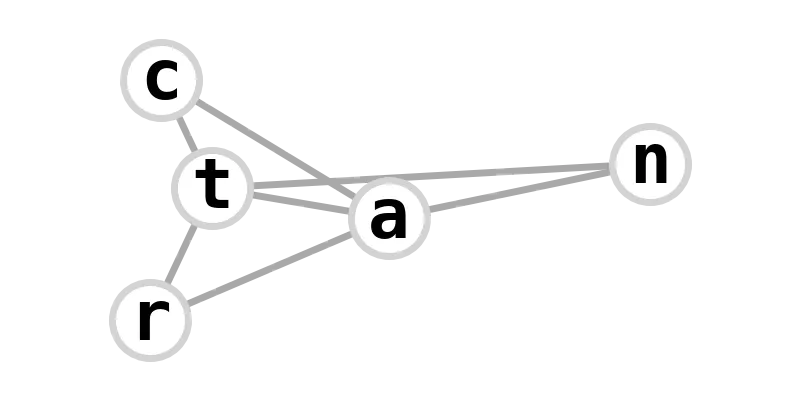 |
| house X graph | lanolin | 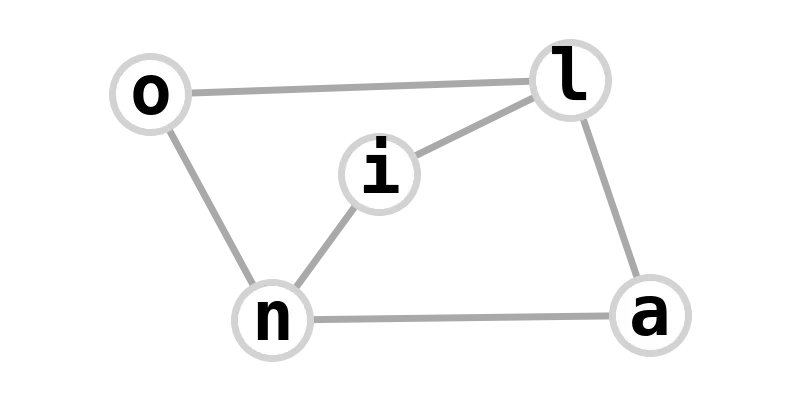 |
| 5-cycle (pentagon) | exhume | 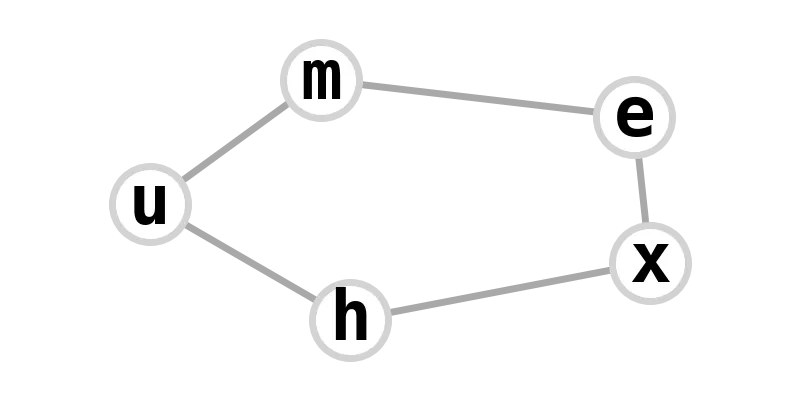 |
| 3-dipyramidal | intensities | 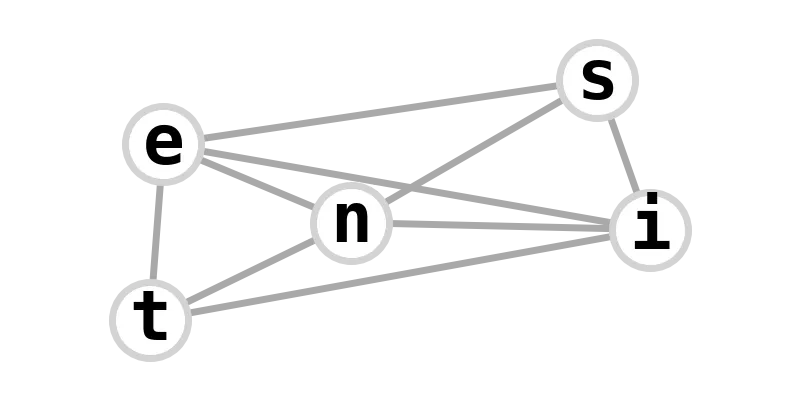 |
| 5-graph 31 | nurturant | 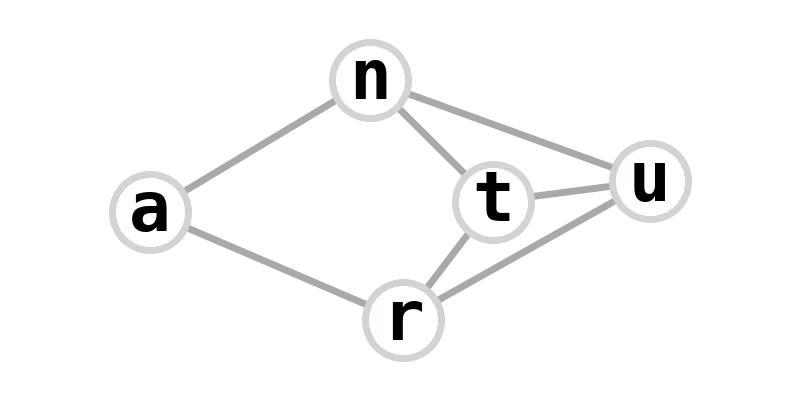 |
| 5-wheel | milliosmols | 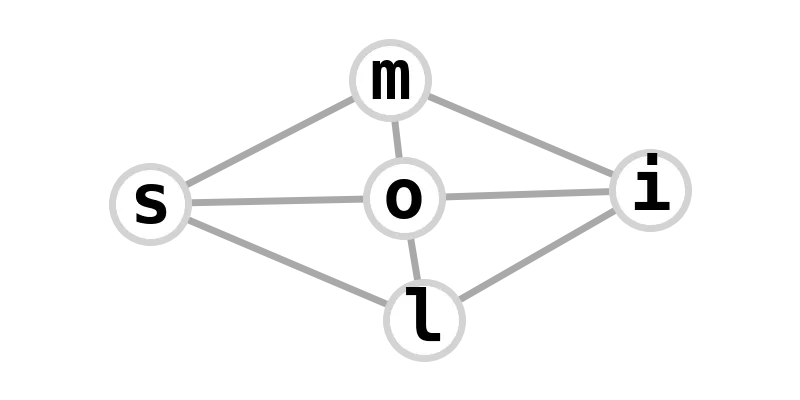 |
| K5 (pentatope) | ??? | |
Names are taken from this page on Biconnected Graphs from Wolfram Mathworld.
6 Nodes
TODO
Prior Art
This video by John Turner had a fun idea: Looking at which words are ‘shaped’ the same. One of the ways he defines a word’s shape is via its graph of letter adjacencies. For example, “baboon” and “refers” have the same graph shape because the network of connections between adjacent letters is similar.
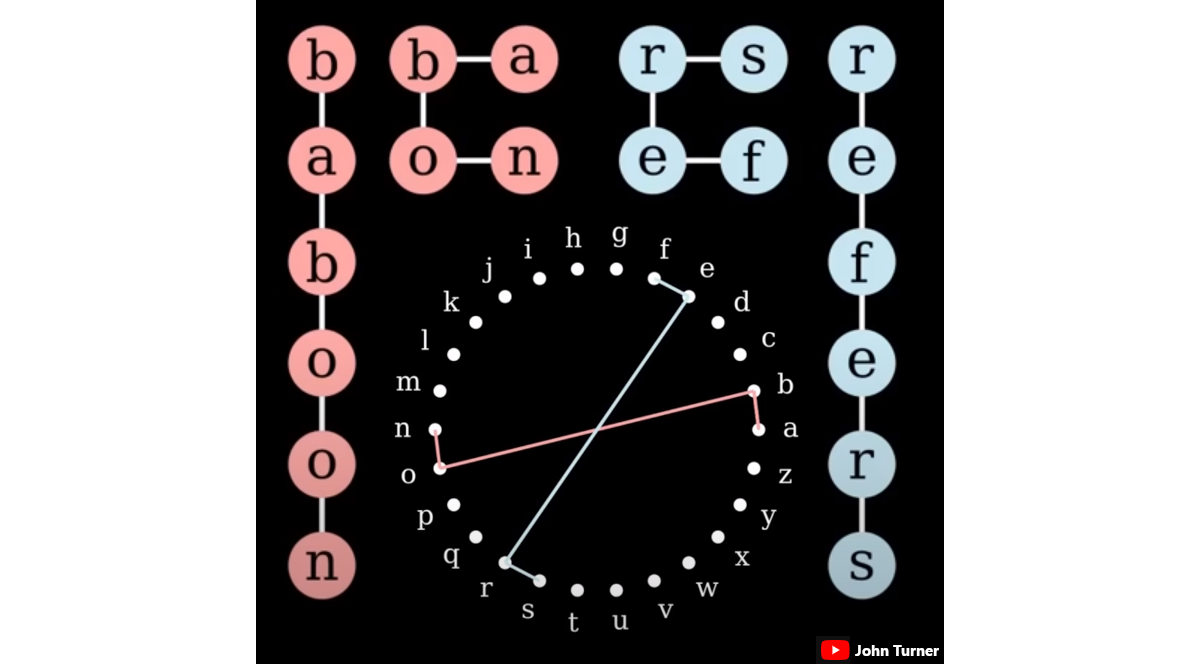
Unfortunately, despite using a graphing library called Scott to compute canonical representations of each word’s graph, what Turner has calculated doesn’t seem to actually be (just) about graph isomorphism. It also takes into account the position of letters around the “letter wheel”. I found this unsatisfying.
Looking at just the networks of letter adjacency, “baboon” should be similar not just to words like “refers”, but also to words like “cats” and “wooly”.
-
“Graph” as in “graph theory”, the study of networks and connections. To get a word’s letter-adjacency graph: Each letter is a vertex. There is an edge connecting two letters if they show up next to each other in the word. The graphs are simple graphs, meaning we don’t connect a letter to itself (in words like “moon”), nor do we add extra edges when the same adjacency happens multiple times (in words like “donor”). ↩
-
I also checked the larger words and none of them seem to contain this shape as a subgraph. If we allow for abitrary two-word phrases, then we can find examples like “incant tactician” and “restart easters”. ↩
-
unique, simple, connected ↩